
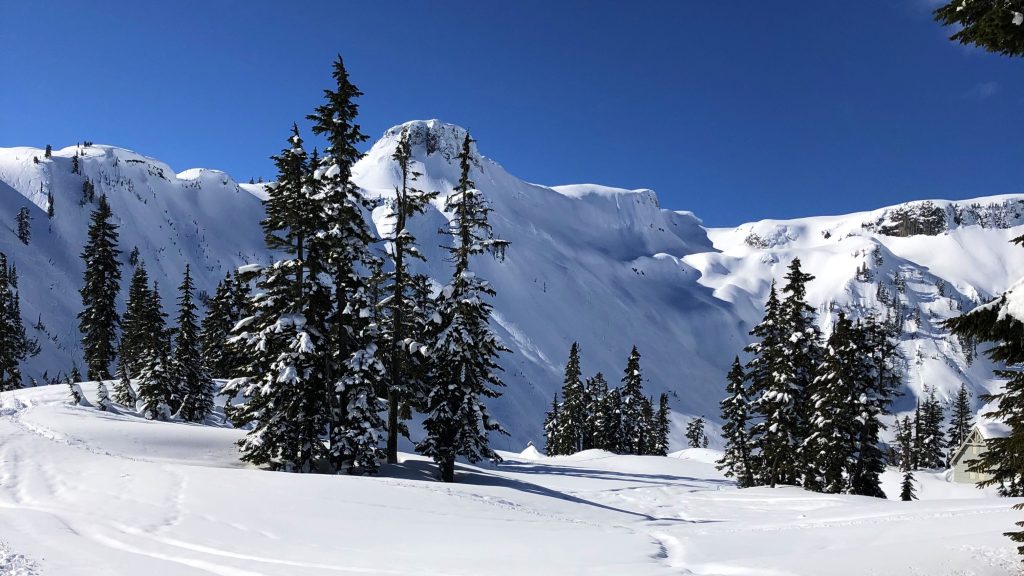
Mountain meadows are one of the more stunning features of the North Cascades. These snowpack meadows are created and maintained by extreme snowfall. Mt. Baker holds the world record for snowfall with nearly 100 feet in 1998. Snow cover throughout most of the year results in a short growing season and a unique group of native plants, dominated by heathers and huckleberries.
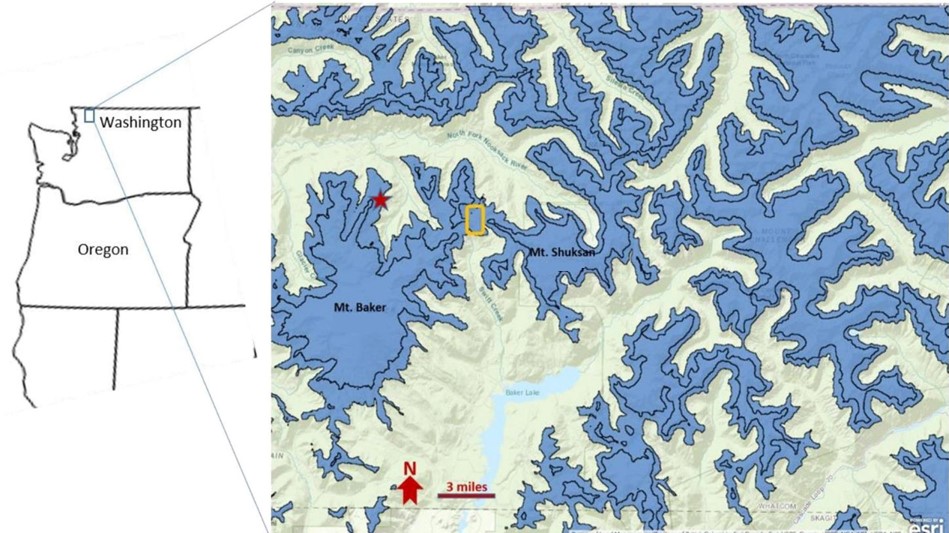
The map reveals a large contiguous “seastar-like” meadow in the northern portion of the range stretching more than 30 miles from Mount Baker across the Picket Range to just west of Ross Lake. Subalpine meadows begin at about 4,200 feet on north facing slopes and gradually transition into alpine meadows at around 5,200 feet (blue shaded area on the map).
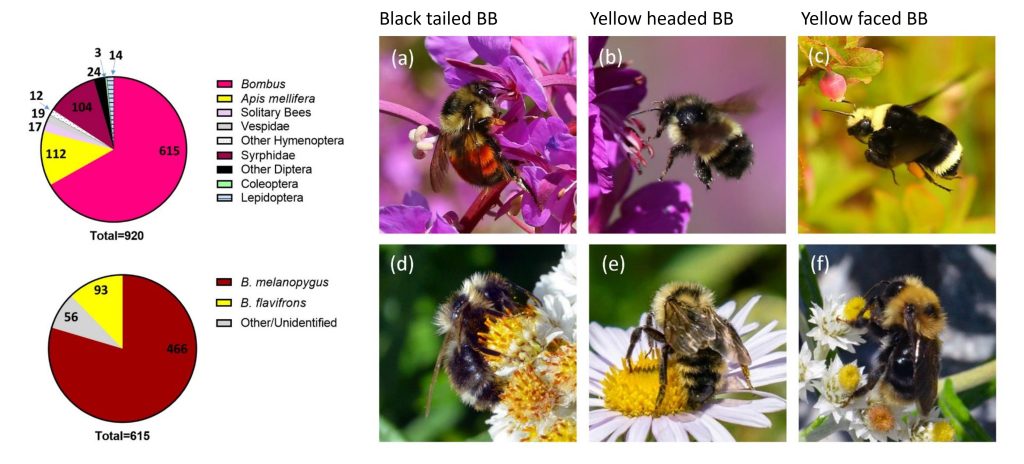
North Cascades mountain meadows support many native flowering plants. Plant diversity is high enough to provide a continuous supply of pollen and nectar for pollinators throughout the snow free season. Abundant heathers and huckleberries provide most of the pollen and nectar for bumble bees, the dominant pollinators in mountain meadows.
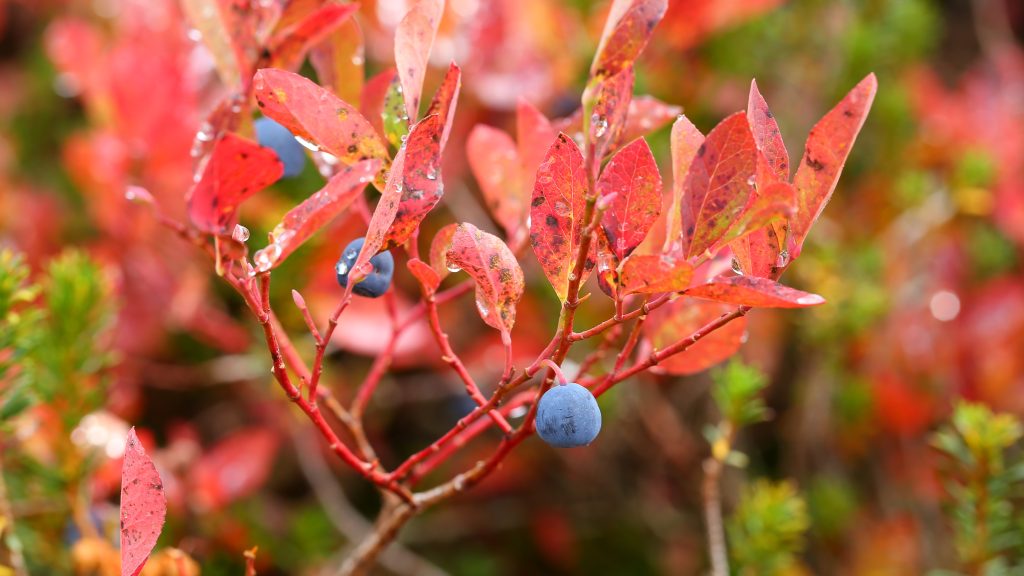
Huckleberry and blueberry production in North Cascades mountain meadows is essential for maintaining healthy populations of berry foraging species. It is particularly important for bears that that use these berries to build overwintering reserves for hibernation.