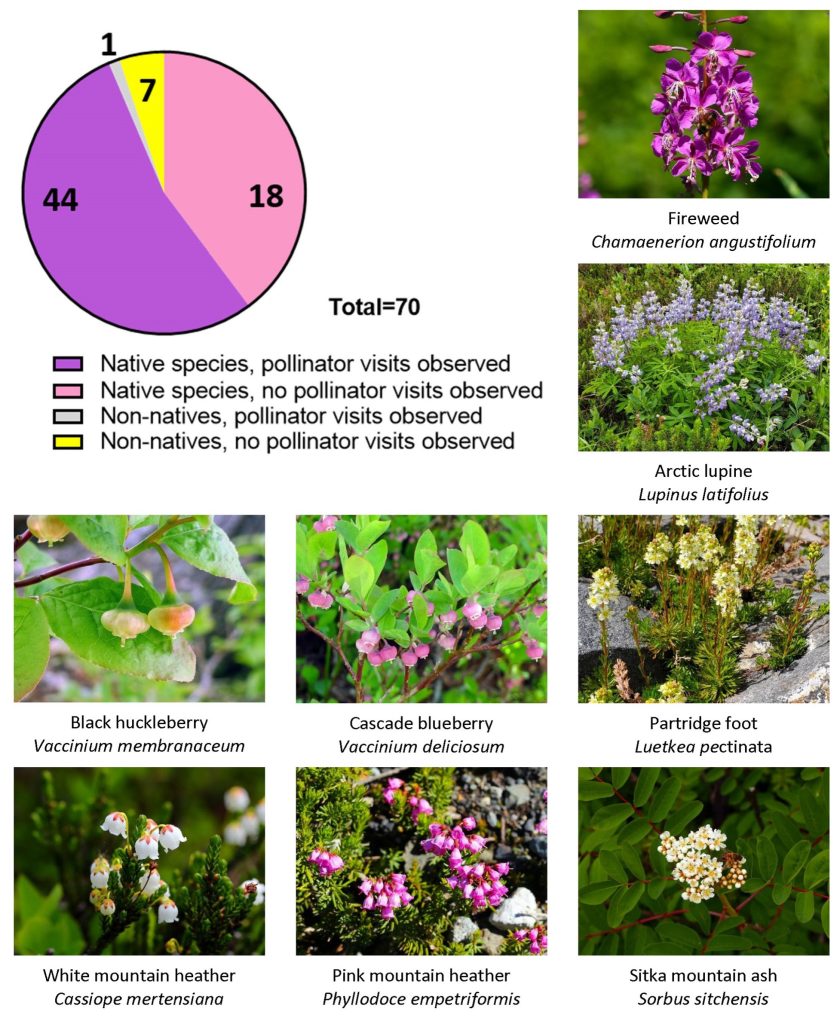
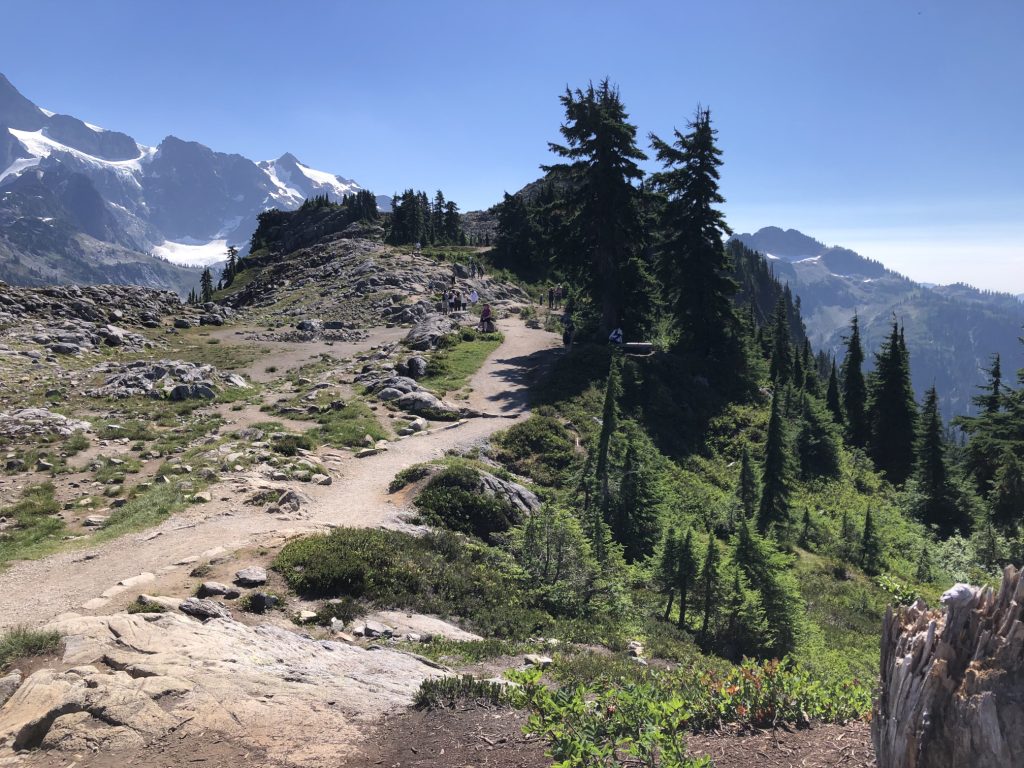
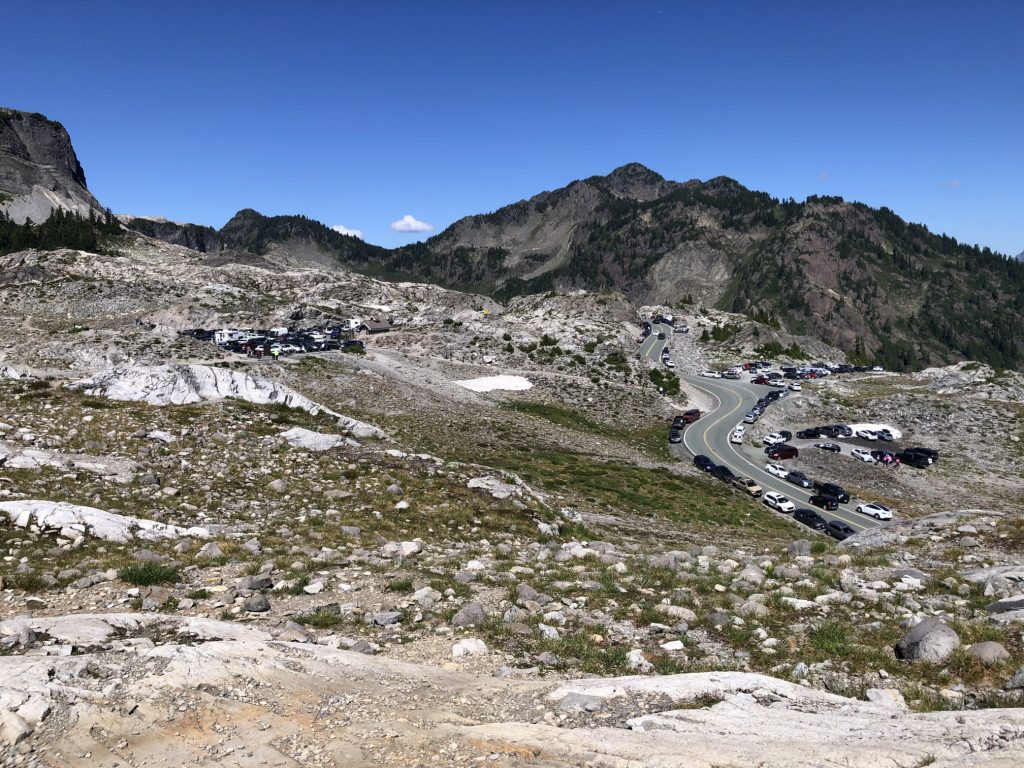
In a typical year, bumble bee foraging resources (pollen/nectar) are highly diverse, are extended across most of Heather Meadows, and are abundant most of the snow-free season. Several native plant species are common.
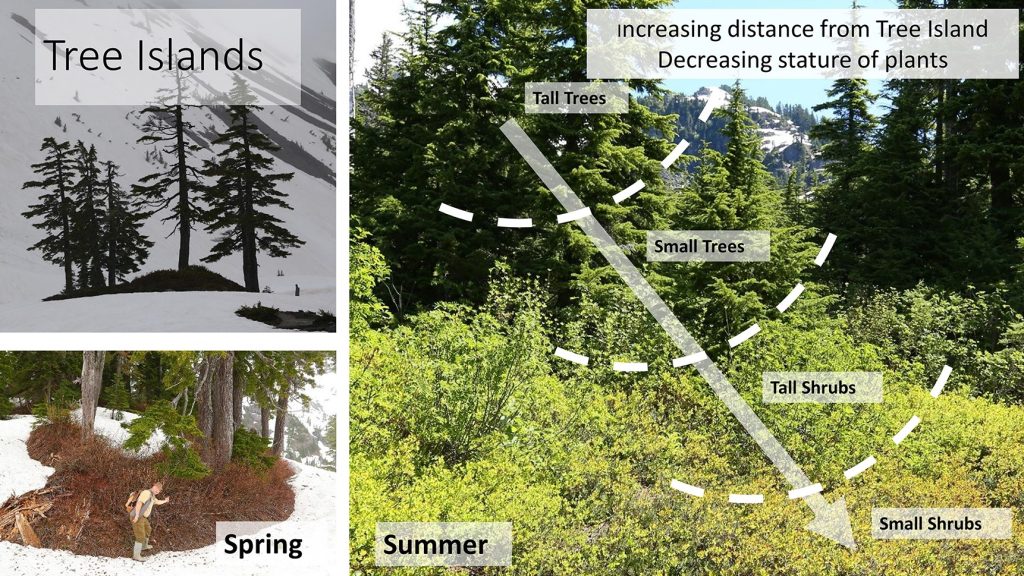
Tree Islands
Tree islands (clusters of trees found throughout subalpine meadows) are very important as early season nesting and foraging sites for bumble bee when all other areas are covered with deep snow.
The availability of nesting sites and pollen and nectar in tree islands may be significant early season limiting factors for bumble bee populations. Use of tree islands for early season foraging on huckleberries (weeks before snow melts in open meadows) lengthens the foraging season and supports colony success.
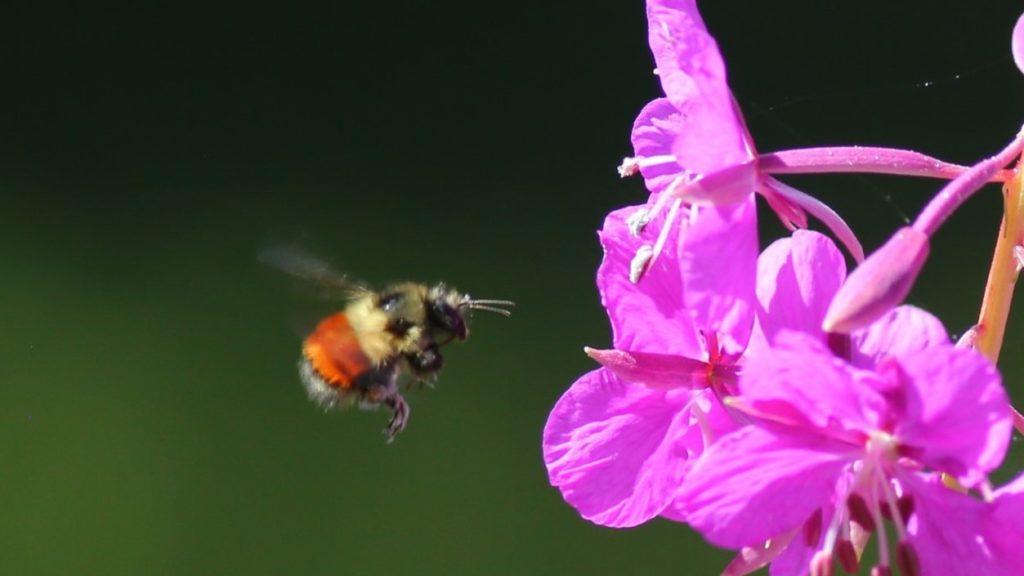
Bombus melanopygus
Bombus melanopygus (blacktailed bumble bee) is the most abundant pollinator in Heather Meadows (more than 50% of observed pollinators). Other research has shown that it is also one of the most susceptible bumble bees to heat stress (a likely outcome of climate change).
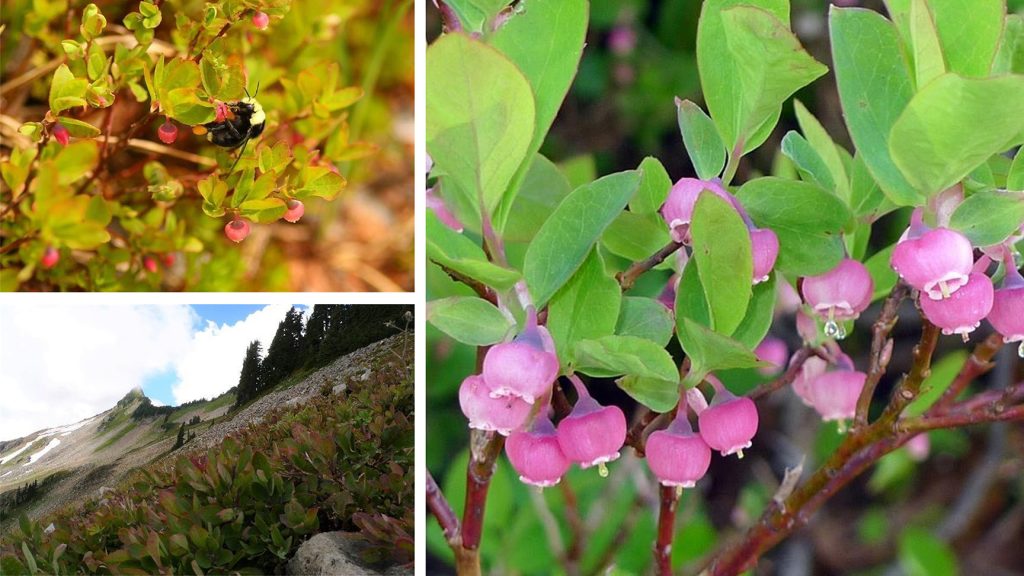
Bumble Bee Pollination of Huckleberries
Huckleberries and blueberries are almost completely dependent on early season bumble bees for pollination (94% of all pollinators observed on these shrubs). Without bumble bee pollination, it is very likely that berry production would decline substantially in mountain meadows, affecting a major food source for bears and other berry foragers.
High Elevation Bumble Bee Foraging
Bumble bees are able to extend availability of pollen and nectar late in the season by shifting foraging behavior to higher elevation meadows after floral resources have declined in lower elevation meadows.
New fall queens foraging for overwintering reserves especially benefit from late season floral resources that are available at higher elevations.
Climate Change
Climate change is a real threat to North Cascades mountain meadows. Counter intuitively, the research showed that a warm year with early snowmelt actually shortens the flowering plant season and reduces pollen and nectar availability.
Viral Disease Threat to Bumble Bees
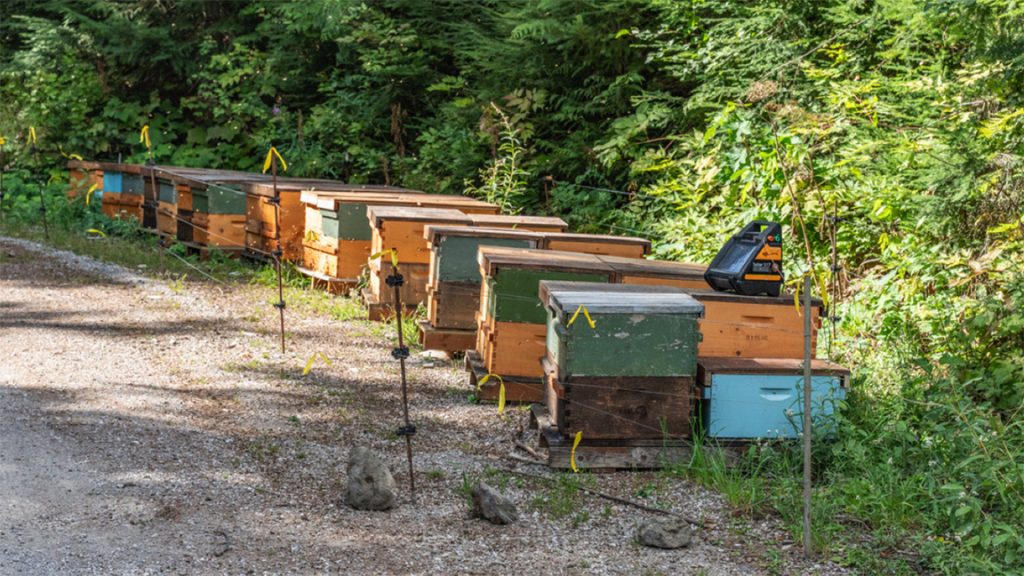
Native bumble bees and introduced honeybees forage on many of the same native flowering plant species in North Cascades mountain meadows. Summer placement of honeybee colonies along Forest Service roads near meadows coincides with active foraging by native bumble bees and creates a risk of viral disease transmission.